
They might look a little strange in your bowl, but chicken feet pack a mighty collagen punch – and that’s exactly why beauty insiders call them a secret weapon. In fact, chicken feet are about 70% collagen by protein weight, making them one of nature’s richest collagen sources. This structural protein is the “glue” that gives skin its strength and elasticity. No wonder long-time fans of chicken feet in Asia swear by them for smooth, glowing skin. It’s not just folklore: when these gelatinous feet simmer in soup or broth, the collagen leaches out into the liquid, nourishing your skin from the inside out. Think of it as an all-natural, budget-friendly beauty treatment simmering on the stove – something that hip East Asian kitchens have known for centuries.
Collagen: Skin’s Best Friend
Pampering your skin with creams or masks is relaxing – but true radiance starts from within. Collagen is the main structural protein in our skin, tendon and bones, and as we age our bodies make less of it. Studies show that boosting collagen intake can significantly improve skin hydration, elasticity, and smoothness. In one clinical trial, women who took a collagen supplement for 12 weeks saw marked improvements in skin moisture and elasticity compared to a control group. In plain terms: their skin became firmer, plumper, and less wrinkled. Another review of multiple studies confirmed collagen’s promise in slowing skin aging. In practice, that means fine lines soften, cheeks look bouncier, and that coveted “dewy glow” becomes more attainable. The image above shows a gentle skincare moment – and now imagine getting similar benefits from the inside by eating a daily dose of collagen-rich soup.
East Asian Beauty Traditions: Secrets of Graceful Skin
Countless women across China, Korea, and Japan have long embraced collagen-rich foods as part of beauty rituals. As one Chinese beauty insider explained, *“The foods I’ve been taught to eat since birth are all packed with collagen… including chicken feet, pigs’ feet, pork-belly skin, fish skin, and even jellyfish”*. These foods start working from the inside out. Traditional postpartum diets in China, for example, feature sesame-oil chicken soup (often made with chicken feet) consumed daily for a month to help new mothers recover their glow. Skincare gurus note that “silk-skin” is the ultimate goal – and in these cultures, silk-skin often begins with savory soups.
It’s not just China. In Korea, the popular spicy chicken-foot dish dakbal is as much about health (and heat!) as it is about flavor. Korean grandmas prize collagen-rich chicken feet to keep joints supple and skin firm during Korea’s dry winters. Japanese cuisine, too, has collagen heroes: long-simmered bone broths and collagen-packed fish soups are staples in many traditional recipes. Essentially, whole sections of Asian cuisine – dim sum’s tender “phoenix claws,” hot pots bubbling with feet and wings, and even congee cooked with bone-in poultry – celebrate the beauty-boosting power of collagen. (As one beauty writer puts it, “health starts from the inside out”, so eat those collagen soups with gusto!)
Modern Glow on a Budget: Chicken Feet vs. Fancy Products
Today’s market offers a dizzying array of collagen products – powders, capsules, creams – often at luxury prices. But here’s the insider tip: chicken feet beat all of them at a fraction of the cost. A high-end jar of collagen powder or serum can run hundreds of dollars for just a few months’ supply. By contrast, chicken feet are usually cheap (or even free from farms) – they’re a byproduct of the poultry industry and many people don’t want them. Your local butcher or Asian market might practically give them away!
And remember, 70% of a chicken foot’s protein is straight-up collagen. There’s no processing needed – just simmer the feet low and slow. Many collagen supplement ads claim to tighten skin, but science shows you get the same amino acids from real food. Studies suggest that collagen from broth may be just as effective at boosting skin hydration and elasticity as purified supplements. In fact, chicken feet deliver more than collagen: they release hyaluronic acid and minerals like calcium into the broth, which further help skin and joints. So instead of spending $$$ on a trendy supplement, you could spend that money on a big pot of homemade collagen broth. It’s natural, time-tested, and crowd-pleasing – even if your friends think it sounds unusual at first!
Beauty on the Menu: How to Enjoy Chicken Feet
Chicken feet are delicious when prepared with flavor and care. Try these simple recipes:
- Collagen-Rich Chicken Feet Broth: Simmer cleaned chicken feet with water, a splash of vinegar, ginger, garlic, and aromatics. Cook on low heat for 6–8 hours. The long simmer breaks down the collagen into gelatin, creating a rich, jelly-like broth. Strain and drink it as a warm soup, or use the broth as a base for noodles or miso soup. Each spoonful is like sipping a collagen elixir – plus it’s hydrating and mineral-rich!
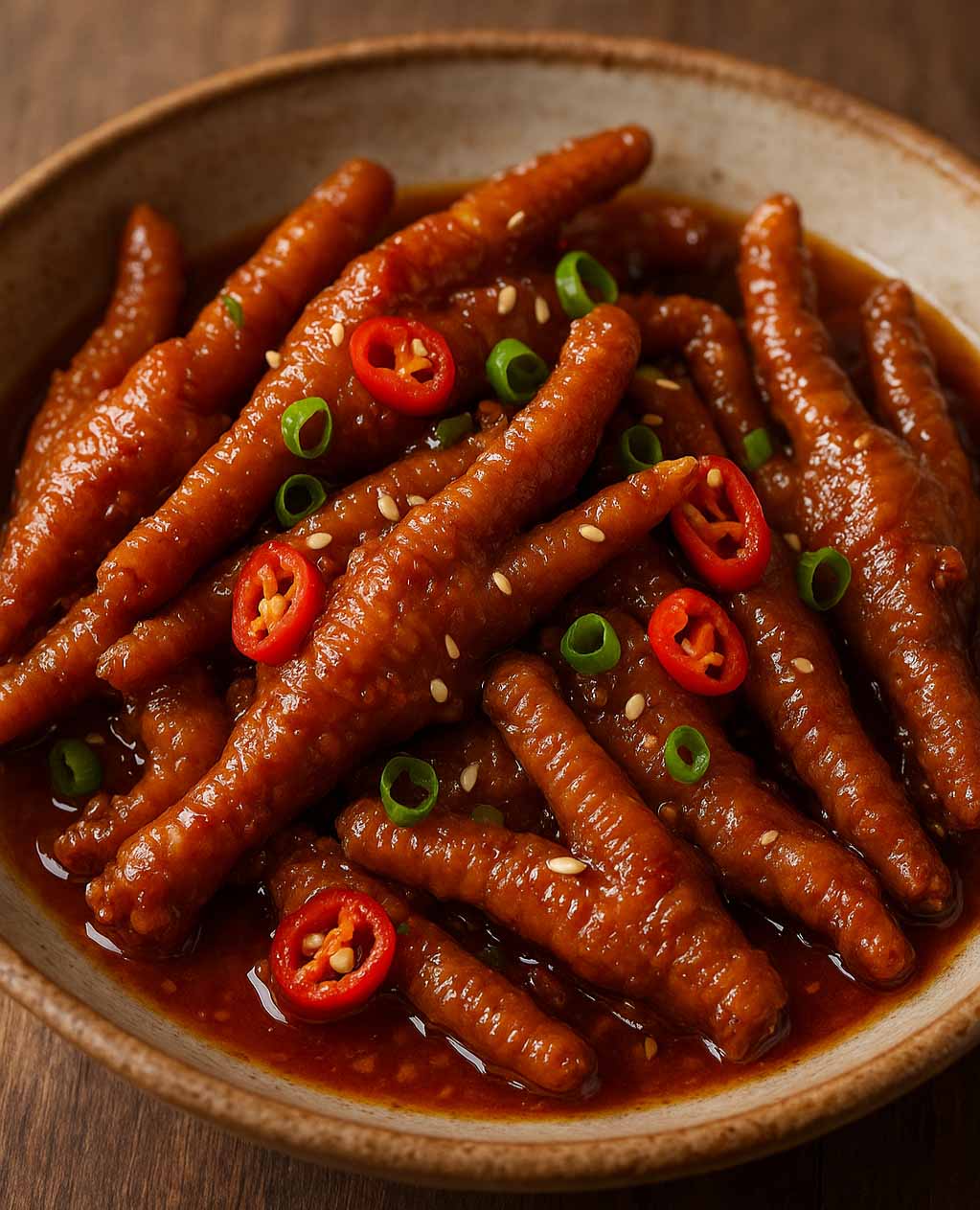
- Spicy Korean Dakbal (Braised Chicken Feet): Clean and blanch chicken feet, then stir-fry or braise them in a spicy sauce made from gochujang (Korean chili paste), soy, garlic, and sesame. Simmer until tender. The result is a finger-licking, tangy dish that’s famously popular in Korea. (Tip: Even if you remove the bones, you’re still eating the collagen-rich skin and tendons.) Enjoy with kimchi and greens – you get heat and hydration for your skin.
- Chinese-Style Braised Chicken Feet: Marinate chicken feet in soy sauce, rice wine, garlic, star anise, and a bit of sugar. Then braise or pressure-cook until soft. This yields the “phoenix claws” you find in dim sum. They take on a rich brown color and melt-in-your-mouth texture. Serve them as a snack or appetizer – the sauce-soaked collagen will leave your skin singing.
Each method infuses the feet’s collagen into the dish. As one chef notes, when the broth cools it will actually gel into jelly, a sure sign of high collagen. Bonus: these recipes are inexpensive to make and yield multiple servings. Even picky eaters often enjoy them when spiced well.
Tips for Glowing Skin
- Collagen Creams vs. Collagen Soup: While topical products can hydrate your skin surface, collagen molecules in creams are often too large to penetrate deeply. Eating collagen-rich chicken feet feeds your skin’s building blocks from within, a strategy backed by science.
- Balanced & Wise Consumption: Nutrition experts advise enjoying chicken feet in moderation as part of a varied diet. Stew or boil them rather than deep-frying, to preserve nutrients. Pair your collagen soup with vitamin C–rich vegetables (like bell peppers or tomato in your broth) to maximize absorption and collagen formation.
- Beyond Skin: Don’t overlook chicken feet’s other bonuses. The chondroitin and glycosaminoglycans in the cartilage help joint health, and the B vitamins (folate, niacin) support overall vitality. So while you boost skin plumpness, you might also feel stronger and more energetic.
- Embrace Curiosity: It might sound new or quirky to you, but chicken feet have been Asian kitchen staples for centuries. Women from Tokyo to Seoul to Shanghai have passed down recipes that keep their skin soft and supple. Give it a try in a way that feels right – maybe start with a store-bought foot broth or a friendly dim sum restaurant order. You might be surprised how tasty and beneficial it can be!
Above all, remember: Beauty is about health from the inside out. Chicken feet offer a time-honored, natural shortcut to youthful skin – no fancy label or high price required. As research confirms, collagen really is key to hydration and elasticity. So why not nourish your skin the old-fashioned way? Saddle up that spoon and dig into some collagen-rich goodness. Your skin (and your wallet) will thank you.